
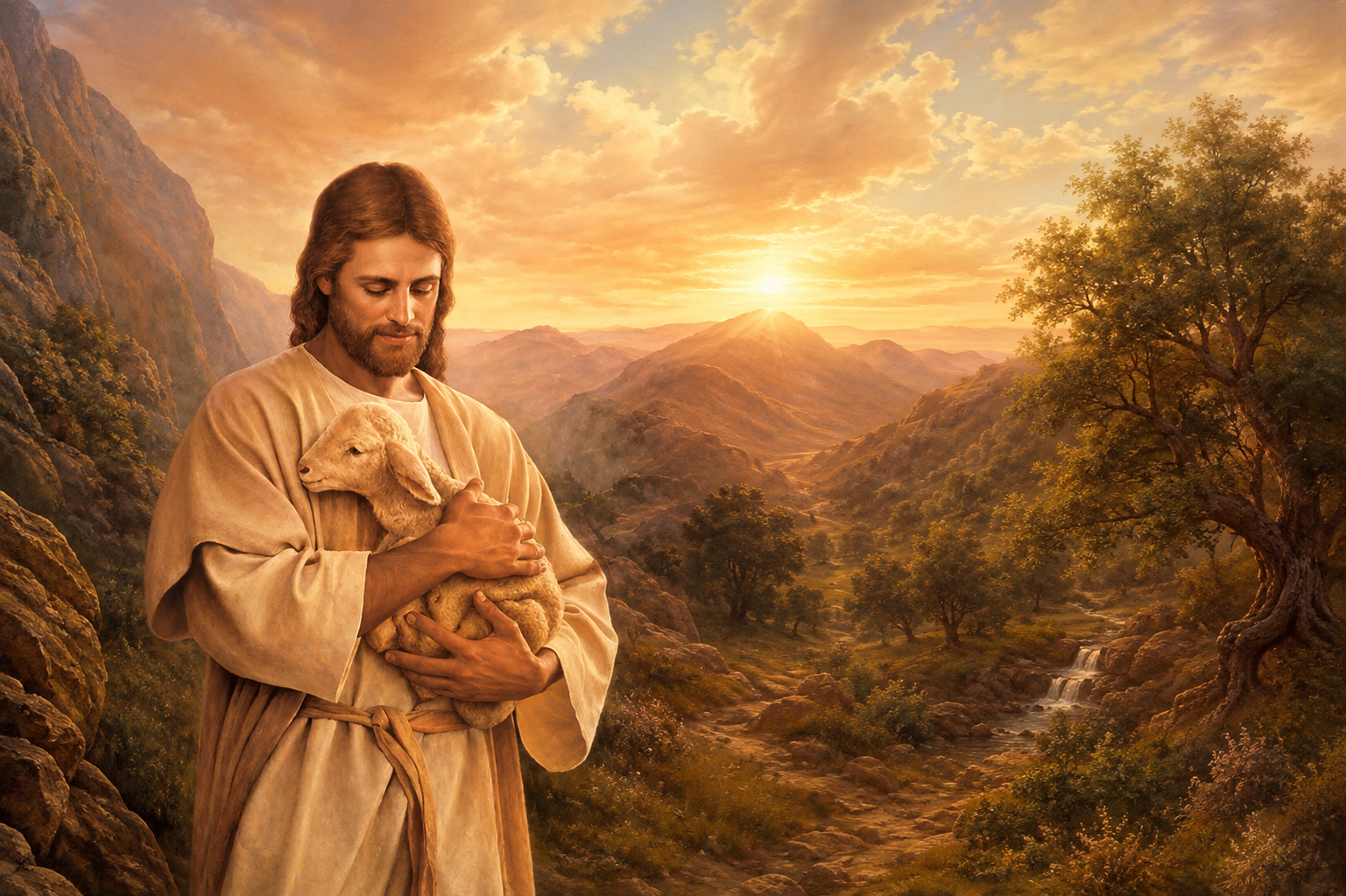
THE HIDDEN RAW-VEGAN MESSAGE OF THE BIBLE
A Biblical Study of Raw Food and the Teachings of Jesus
Dear Sir or Madam,
I have been studying the connection between raw veganism and the Bible, particularly through the work of Arshavir Ter-Hovhannisian (Aterhov), as well as through the Bible itself. During this research, I found dozens of passages and ideas related to raw food, vegetarianism, natural food, health, longevity, and the teachings of Jesus throughout the Old Testament, the Jewish scriptures, the Gospels, and the Book of Daniel.
I discussed these findings in a series of six videos that I published on YouTube in Persian (Dari). The videos contain my detailed explanations of the biblical passages, the reasoning behind my interpretation of them, and their connection with the philosophy of raw food.
The original videos are in Persian, but YouTube has automatically generated English dubbing for them. Therefore, they can be watched in English by selecting English as the audio language in the video settings. The videos also contain visual material and images related to the subjects being discussed.
Because the videos are lengthy, I used ChatGPT to work through the transcripts of all six videos and organize the material into the English article attached/below. I have tried to preserve the arguments and explanations presented in the videos rather than reducing them to a simple list of Bible verses.
The links to all six videos are included in this page.
- https://www.youtube.com/watch?v=vNel46o9HeA&t=311s
- https://www.youtube.com/watch?v=AvLSKVKItWw
- https://www.youtube.com/watch?v=hul5265DPy4&t=207s
- https://www.youtube.com/watch?v=IN2rQ_uZMCI&t=172s
- https://www.youtube.com/watch?v=qy2XKs9XWJ4&t=24s
- https://www.youtube.com/watch?v=UfnajBGfmnk&t=261s
I would be very interested in your thoughts on this study, especially because of your organization’s long history with the raw-food movement and its Christian background.
I would be grateful if you could take the time to read the article and, if possible, share your thoughts about the biblical connections I have found.
Kind regards,
Ali Farhang Mehr
A Complete Reconstruction of the Dietary Philosophy Presented in the Six Videos
Introduction
The six videos present a unified interpretation of the Bible in which the dietary story of humanity is not merely a collection of religious rules, but a coded account of what human beings were originally designed to eat.
The argument begins at the very beginning of Genesis.
God creates humanity, places human beings in a garden, gives them plants and seed-bearing fruits as food, and establishes agriculture as their fundamental earthly occupation. The videos then follow humanity through the Fall, the extraordinary lifespans of the pre-Flood generations, the Flood of Noah, the subsequent permission to eat animals, and the dramatic reduction in human lifespan that follows.
The central observation is that the biblical dietary system changes at exactly the point where human longevity begins to decline.
Before the Flood, humanity is presented as living on the foods God originally provided: plants and fruits.
After the Flood, humanity is permitted to eat animals.
The generations following Noah progressively live shorter lives, eventually approaching ordinary human lifespans.
The videos therefore interpret the biblical narrative as containing a dietary code:
Plant food belongs to the original human condition; animal food appears later as a permission; and the deterioration of human health and longevity follows this dietary change.
The argument then continues into the prophets, Daniel, the teachings of Jesus, the Last Supper, the symbolism of bread and wine, the concept of “living food,” the human body as the temple of God, and finally the replacement of animal sacrifice by the sacrifice of Christ.
The result is a complete philosophical system in which the Bible is interpreted as containing coded indications toward vegetarianism and, ultimately, raw veganism.
I. GENESIS: THE ORIGINAL HUMAN DIET
Genesis 1:29 — God Gives Plants to Humanity
The first and most fundamental dietary passage is Genesis 1:29.
God tells humanity:
“I have given you every seed-bearing plant on the face of the whole earth and every tree that has fruit with seed in it. They will be yours for food.”
The videos treat this as the starting point of the entire dietary argument.
God creates human beings and then tells them what their food is.
The food explicitly provided to human beings is:
- seed-bearing plants;
- fruit-bearing trees;
- fruits containing seeds.
Animals are not included in this original human dietary prescription.
The speaker makes a comparison with a machine.
The creator of a machine knows better than anyone else what kind of fuel that machine requires. Likewise, God, as the creator of the human body, knows what food is appropriate for human beings.
If God created humans and gave them plants and fruits as their food, then these foods should be regarded as the food for which the human body was originally designed.
This leads to the conclusion that modern foods such as hamburgers, chicken, kebab and similar animal foods were not the foods God originally assigned to humanity.
The argument is therefore not simply:
“Vegetables are healthy.”
It is:
The Creator Himself specified the original human food.
That distinction is important.
II. EDEN: HUMANITY’S ORIGINAL ENVIRONMENT
Genesis 2 — The Garden of Eden
The next part of the argument concerns Eden.
The videos interpret Eden as a real earthly garden rather than merely a location in another heavenly dimension.
The argument is that humanity originally lived under different earthly conditions.
The Garden of Eden represents a condition of life in which:
- humans have direct access to plants;
- humans obtain food from the garden;
- humans are surrounded by nature;
- human beings have a fundamentally different relationship with their environment.
The speaker argues that the biblical concept of paradise therefore does not necessarily mean that humans originally came from heaven and will eventually return to heaven.
Rather, Earth itself can become a paradise depending on the conditions under which humans live.
One human being might live to 100 years under one set of conditions and only 50 under another. Therefore, the environment and lifestyle are crucial to the human condition.
III. HUMANITY’S ORIGINAL “JOB”
Genesis 2–3 — Cultivating the Earth
Another overlooked element of the story is the occupation assigned to humanity.
Adam is placed in the garden to cultivate and take care of it.
After Adam is expelled from Eden, God sends him to cultivate the ground from which he was taken.
The video therefore interprets agriculture as the fundamental human occupation established by God.
Human beings are supposed to:
cultivate the earth → obtain food from the earth → eat the food produced by plants.
After the Fall, this work becomes harder, but agriculture remains the basic connection between human beings and food.
This leads to another philosophical point in the video: many professions that modern society treats as fundamental are relatively recent human constructions. The original occupation described in Genesis is much simpler:
cultivate the earth and obtain food from it.
IV. THE FORBIDDEN FRUIT
The videos also develop a separate theory concerning the forbidden fruit.
The speaker argues that the Bible does not identify the forbidden fruit as an apple.
Since Genesis 1:29 describes seed-bearing fruits and plants as food, the speaker reasons that the forbidden food may have been something that did not fit this category.
The proposed candidate is the mushroom.
The argument is based on several observations:
- A mushroom is not botanically a plant.
- It is not technically a fruit.
- Some mushrooms have powerful psychoactive effects.
- Some mushrooms are poisonous.
- Mushrooms can cause disease or poisoning.
- The biblical story associates the forbidden food with suffering and death.
The speaker therefore proposes that the forbidden “fruit” may have been a mushroom rather than an ordinary fruit such as an apple, pomegranate or fig.
The video also connects the mushroom theory to the idea that psychoactive mushrooms could have affected human consciousness and introduced knowledge of good and evil.
This is an important part of the larger philosophy because it creates a distinction between:
God-given natural food
and
a food that introduced something harmful into human existence.
V. THE FALL AND HUMAN SUFFERING
Genesis 3
After eating the forbidden food, Adam and Eve experience a transformation of their condition.
The video pays particular attention to God’s statement to Eve:
“I will greatly increase your pains in childbearing.”
The speaker then makes a biological comparison.
According to the video’s argument, human evolution involved:
- initially smaller brains;
- larger jaws;
- extensive chewing associated with plant foods;
- later enlargement of the brain;
- reduction of jaw size;
- enlargement of the skull.
A larger fetal skull would make childbirth more difficult.
The speaker therefore sees a parallel between the biblical statement about painful childbirth and the biological history of human evolution.
This becomes part of the video’s larger argument:
The biblical Fall is not merely a religious story; it contains biological clues about changes in human life.
VI. THE EXTRAORDINARY LONGEVITY OF THE PRE-FLOOD GENERATIONS
Genesis 5
This is one of the most important parts of the entire project and was indeed underrepresented in my previous answer.
Genesis gives the ages of the early generations individually.
The video goes through them one by one.
The figures presented in the transcript include:
- Adam — 930 years
- Seth — 912 years
- Enosh — 905 years
- Kenan — 910 years
- Mahalalel — 895 years
- Jared — 962 years
- Enoch — 365 years
- Methuselah — 969 years
- Lamech — 777 years
- Noah — 950 years
The speaker emphasizes that this is not simply the extraordinary lifespan of one miraculous individual.
The biblical text gives similarly extraordinary ages for an entire sequence of generations.
Therefore the video asks:
What environmental or lifestyle condition could have produced a population in which people repeatedly lived for hundreds of years?
The answer developed by the speaker is dietary.
The people before the Flood were living under the original plant-based food system.
VII. GENESIS 6:3 — THE 120-YEAR PREDICTION
The next crucial passage is Genesis 6:3.
The video interprets God’s statement concerning human beings having 120 years as a prediction of a coming reduction in human lifespan.
The important distinction the speaker makes is that God is not necessarily imposing an arbitrary maximum.
Instead, God may be predicting what will happen as conditions change.
In other words:
God knows that the human condition is going to change, and therefore predicts that human lifespan will fall toward 120 years.
This is interpreted as evidence that lifespan depends upon conditions rather than being permanently fixed.
The video then connects this prediction with the Flood and the subsequent change in human diet.
VIII. THE FLOOD: THE GREAT DIETARY TURNING POINT
Genesis 9:3–4
This is the central turning point.
Before the Flood, humanity receives plants and fruits as food.
After the Flood, God tells Noah:
“Everything that lives and moves about will be food for you. Just as I gave you the green plants, I now give you everything.”
But immediately comes a restriction:
“But you must not eat meat that has its lifeblood still in it.”
The video interprets this as an unmistakable change in the human dietary system.
Before the Flood
Humanity:
plants + fruits
After the Flood
Humanity:
plants + fruits + animals
The speaker therefore asks why the permission was introduced.
The answer proposed is that humanity itself had begun moving toward animal consumption.
God therefore gives humanity greater dietary freedom, even though this was not necessarily the original intention.
The video interprets the passage almost as a concession:
humans wanted animal food, and God eventually permitted it.
IX. THE LIFESPAN COLLAPSE AFTER THE FLOOD
This is where the video’s strongest numerical argument appears.
The generations after Noah begin living substantially shorter lives.
The transcript lists examples such as:
- Shem — 600 years
- Arpachshad — 438 years
- Shelah — 433 years
- Eber — 464 years
- Peleg — 239 years
- Reu — 239 years
- Serug — 230 years
- Nahor — 148 years
- Terah — 205 years
- Abraham — 175 years
- Ishmael — 137 years
The speaker explicitly says:
the ages are getting shorter.
The graph presented in the video is intended to show the gradual decline.
The crucial argument is then made:
Before the Flood
Humans were restricted to plant foods and lived approximately 900 years.
After the Flood
Humans were permitted to eat animals.
Their lifespans gradually decline toward approximately 120–130 years, and eventually toward ordinary modern human lifespans.
The speaker says that the striking thing is that the major change in the biblical story is the food system.
Before the Flood, people were vegetarian.
After the Flood, people receive permission to eat animals.
And after this change, longevity progressively collapses.
This is one of the central pieces of the video’s philosophy:
The dietary change corresponds with the biological decline of humanity.
X. NOAH’S 950 YEARS
Noah himself occupies a transitional position.
He lives 600 years before the Flood and another 350 years afterward, dying at 950.
The speaker therefore treats Noah as a bridge between the two dietary worlds.
Noah’s generation represents the last period of extraordinary human longevity.
His descendants then progressively decline in lifespan.
This makes Noah especially important to the video’s theory of diet and longevity.
XI. MEAT EATING AND THE DECLINE OF HUMAN HEALTH
The video then connects the biblical story with modern medical claims.
The argument is that meat consumption is associated with:
- cancer;
- obesity;
- other diseases;
- deterioration of human health.
The speaker interprets this as corresponding with the biblical warning about the consequences of changing humanity’s food.
Thus:
forbidden food → suffering
and later:
animal food → disease and shortened lifespan.
The biblical narrative and modern nutritional observations are therefore presented as pointing in the same direction.
XII. LEVITICUS 3:17 — DO NOT EAT FAT OR BLOOD
The next explicit dietary rule is:
Leviticus 3:17
“You shall eat neither fat nor blood.”
The video interprets this as a permanent dietary warning.
The argument is that God specifically prohibits two components of animal food because they may be harmful to the human body.
The speaker then extends the discussion to foods such as:
- eggs;
- milk;
- dairy;
- cheese;
because they contain significant amounts of fat.
The broader conclusion is that the Bible contains warnings about animal-derived foods that modern people often ignore.
XIII. PROVERBS 6:17 — SHEDDING INNOCENT BLOOD
The video then turns from health to ethics.
Proverbs 6:17
The text condemns:
“hands that shed innocent blood.”
The speaker asks whether “innocent blood” can include the blood of innocent animals.
The argument is that an animal being killed for food is also an innocent creature that has not committed any crime.
Therefore:
killing an innocent animal can be understood as shedding innocent blood.
This changes the vegetarian argument from a purely nutritional question into a moral question.
XIV. ISAIAH 66:3 — KILLING AN ANIMAL COMPARED WITH KILLING A HUMAN
The video considers Isaiah 66:3 one of the strongest passages.
The text says, in the translation quoted in the video:
“He who sacrifices a bull is like one who kills a man, and he who sacrifices a lamb is like one who breaks a dog’s neck.”
The speaker’s conclusion is extremely direct:
God is telling humanity that He does not approve of killing animals.
The video rejects the idea that biblical permission for animal sacrifice should automatically be interpreted as a divine endorsement of meat-eating.
Instead, the speaker argues that the deeper prophetic message is that God does not delight in the killing of animals.
XV. DANIEL 1 — THE BIBLICAL VEGETARIAN EXPERIMENT
Daniel 1:12–16
This is presented as a direct historical dietary experiment.
Daniel is serving under the Babylonian royal system.
He refuses the king’s food.
Instead he asks:
Give us vegetables/legumes to eat and water to drink for ten days.
The experiment is performed.
After ten days, Daniel and the other young men look:
- healthier;
- better in appearance;
- physically superior to the young men eating the king’s food.
The royal food is consequently withdrawn from them, and they continue receiving the plant-based diet.
The video extracts several conclusions.
First:
There is a historical biblical record of a person deliberately choosing a plant-based diet.
Second:
The plant-based group appears healthier than the group eating the royal diet.
Third, the speaker connects this with longevity:
vegetarianism can help people remain younger and live longer.
Daniel is therefore treated as a biblical example of the physical benefits of plant-based nutrition.
XVI. HOSEA 6:6 — MERCY OVER SACRIFICE
Hosea 6:6
The video quotes:
“For I desire mercy, not sacrifice, and the knowledge of God more than burnt offerings.”
The speaker interprets this as God’s declaration that mercy is more important than animal sacrifice.
This becomes a major bridge between the Old and New Testaments.
The argument is:
God prefers mercy to sacrifice.
Therefore:
God does not fundamentally desire animals to be killed.
And this prepares the way for Christ, whose own death replaces the animal sacrificial system.
XVII. JESUS IN THE DESERT — 40 DAYS WITHOUT ORDINARY FOOD
Matthew 4:4 / Luke 4:4
Jesus fasts for forty days.
Satan tells him:
If you are the Son of God, command these stones to become bread.
Jesus responds:
“Man shall not live by bread alone, but by every word that comes from the mouth of God.”
The speaker connects this directly with vegetarian and raw-food experience.
People often ask vegetarians:
“How can you survive just by eating vegetables and fruit? How can you live without bread or rice?”
The speaker interprets Jesus’ response as an answer to precisely this type of question.
Human beings do not have to depend upon bread and rice.
They can live on the food God originally designed for them:
plants, vegetables and fruits.
Thus the forty-day fast becomes another “code” in Jesus’ teaching concerning natural food.
XVIII. THE LAST SUPPER — BREAD AND WINE
This is one of the largest sections of the videos.
At the Last Supper Jesus takes bread, gives thanks, breaks it and says:
“Take, eat; this is my body.”
He then takes the cup and says:
“Drink from it, all of you. This is my blood of the new covenant.”
The video interprets the symbolism in a very literal nutritional direction.
Jesus says:
This is my body.
The object he identifies with his body is bread.
Jesus says:
This is my blood.
The object he identifies with his blood is wine / grape juice.
The speaker therefore reasons that Jesus is revealing what nourished his physical existence:
bread and plant-derived liquid.
The speaker describes the bread as a plant food and the wine as grape juice/fruit-derived liquid.
He then makes the dietary conclusion:
Jesus is telling his followers to consume these plant-derived foods as the symbolic representation of his body and blood.
XIX. THE ABSENCE OF MEAT AT THE LAST SUPPER
The speaker places particular emphasis on what is not present in the Gospel account.
Jesus does not say:
“Eat this meat.”
He does not say:
“This meat is the true food.”
Instead, the central foods mentioned are:
- bread;
- wine.
The speaker therefore argues that the Last Supper does not contain a Christian instruction to eat meat.
This is then connected with Leonardo da Vinci’s The Last Supper.
The speaker argues that the most important “secret” of the painting is not hidden geometry, triangles or mirrored images.
It is the food on the table.
The table is filled with:
- bread;
- cups of wine.
The speaker therefore interprets the painting as visually preserving the dietary message contained in Jesus’ words.
XX. JOHN 6:54–58 — TRUE FOOD AND THE BREAD OF LIFE
The next major passage is John 6.
Jesus says that whoever eats his flesh and drinks his blood has eternal life.
He describes his flesh as true food and his blood as true drink.
He then speaks of the bread that came down from heaven.
The speaker sees a profound connection between this language and the raw-food concept of:
true food
versus
false or dead food.
XXI. THE CONNECTION WITH ARSHAVIR TER-HOVANNESIAN / ATERHOV
At this precise point, the speaker says that reading John 6 immediately reminds him of the vegetarian book of Arshavir Ter-Hovannessian (Aterhov / آوانسیان), which he had read in Iran.
The speaker finds it remarkable that the two systems appear so similar despite having no direct connection.
Aterhov’s raw-food philosophy distinguishes between:
Living food
- plants;
- vegetables;
- fruits;
- raw foods capable of continuing biological life.
and:
Dead food
- meat;
- cooked vegetables;
- food whose cells have been killed by cooking.
The seed becomes the central example.
Put a living seed in soil and it grows.
Cook the seed first and then place it in the soil and it no longer grows.
Therefore, the speaker explains:
a living seed produces life;
a cooked seed has been rendered biologically dead.
The raw-food philosophy consequently argues that human beings should consume living food rather than dead food.
The video then says that this is remarkably similar to Jesus’ language of:
- true food;
- true drink;
- bread of life;
- life.
This is the point at which the biblical vegetarian argument becomes explicitly raw vegan.
XXII. LIVING FOOD VS. DEAD FOOD
The philosophical distinction can therefore be stated as:
Living food
Raw:
- fruit;
- vegetables;
- plants;
- foods capable of continuing biological life.
Dead food
- meat;
- cooked vegetables;
- boiled foods;
- food whose living cellular structure has been destroyed.
The argument is not merely that raw food is more nutritious.
The argument is ontological:
living beings should eat living food.
The speaker says that this is one of the central concepts of the raw-vegan movement and that it corresponds almost exactly to the language found in the Gospel concerning true food and life.
XXIII. THE BODY IS THE TEMPLE OF GOD
The videos then connect the dietary argument with Paul’s teaching concerning the body.
The human body is described as:
the temple of God / temple of the Holy Spirit.
The speaker’s reasoning is:
If the human body is the temple in which God’s Spirit lives, then human beings do not have unlimited moral freedom to damage it.
If a person deliberately consumes foods that damage the body, that person is effectively damaging God’s temple.
The speaker therefore connects this directly with his argument against meat and cooked food.
The logic becomes:
God’s temple → human body
human body → must be protected
harmful food → damages body
therefore harmful food → damages God’s temple.
XXIV. ATERHOV’S CLAIM ABOUT COOKING AND DISEASE
At this point the video quotes Aterhov’s own raw-food philosophy.
The quoted material says, in substance:
Cooking is a principal cause of disease.
Disease is something unnatural that humans create through cooked food and other dead and chemical substances.
Living plant food is the one true food assigned by nature to humanity.
Those who abandon cooked food and eat living plant food can escape disease.
The statement goes even further and says:
For raw-food eaters, disease does not exist.
The video presents this as Aterhov’s conclusion from thousands of cases in Iran and abroad.
Thus Aterhov supplies the nutritional theory that completes the biblical argument.
XXV. PASSOVER AND THE SACRIFICIAL LAMB
The final major biblical code concerns Passover.
The video describes the Jewish Passover tradition in which a lamb is sacrificed.
The lamb is then eaten.
The speaker argues that Jesus deliberately dies during the same period.
He connects the timing of Christ’s death with the traditional time of the Passover sacrifice.
The conclusion is that Jesus is deliberately presenting himself as the replacement for the sacrificial lamb.
This explains the Christian title:
The Lamb of God
Jesus becomes the sacrifice.
Therefore Christians no longer need to sacrifice animals for forgiveness.
The dietary significance is enormous within the video’s interpretation:
Christ’s sacrifice ends the necessity of animal sacrifice.
The old system required the death of an animal.
The new system replaces the animal with Christ.
Thus the Christian message becomes increasingly separated from ritual animal killing.
XXVI. JESUS’ DEATH AS THE END OF ANIMAL SACRIFICE
The speaker emphasizes that Jesus does not merely die.
He dies at the symbolic moment of the Passover sacrifice.
He therefore interprets the timing as deliberate “coding.”
Jesus knows:
- the day;
- the hour;
- the sacrificial system;
- the meaning of the lamb.
He then replaces the lamb with himself.
Therefore:
No more lamb needs to be killed.
The sacrificial system has been transformed.
This is interpreted as another hidden dietary message contained within the Gospel.
XXVII. DID JESUS EAT FISH?
The videos directly confront the strongest apparent counterexample.
Luke 24:36–43
After the resurrection, Jesus appears to the disciples.
They are frightened and think they are seeing a spirit.
Jesus tells them to look at his hands and feet.
He says that a spirit does not have flesh and bones.
Then he asks:
“Do you have anything here to eat?”
They give him:
a piece of broiled fish.
He eats it in front of them.
The video does not deny this.
Instead, the speaker argues that the context is critical.
Jesus is not choosing fish as a meal.
He does not say:
“Bring me fish.”
He asks whether there is anything available to eat.
The disciples happen to have fish.
They give it to him.
He eats it in front of them because the purpose is to prove that he is physically real and not a ghost.
Therefore the speaker argues:
the fish is evidence of physical resurrection, not a dietary recommendation.
This is an important part of the argument because the speaker explicitly recognizes the fish passage rather than ignoring it.
XXVIII. EARLY CHRISTIAN VEGETARIANISM
The videos then move from scripture to Christian history.
The speaker claims that the leader of the earliest Christian church was Jesus’ half-brother and that this early Christian leader was vegetarian.
The speaker also claims that a later leader of the early church was vegetarian.
From this, the video argues that vegetarianism existed within early Christianity and that this tradition survived in Christian fasting.
According to the speaker, Christians later retained periods during which:
meat was forbidden while other foods could still be eaten.
The weekly Eucharistic/Last Supper ritual also retains:
bread + wine.
Thus the speaker sees a historical continuity:
Jesus → early Christian vegetarianism → fasting → avoidance of meat → bread and wine as central ritual foods.
XXIX. THE CENTRAL CODE OF THE ENTIRE THEORY
At this point all of the separate biblical clues are assembled.
The videos see the following sequence:
Genesis
God gives plants and fruits.
Eden
Humans live in a garden and cultivate it.
Pre-Flood humanity
Humans live for hundreds of years.
Genesis 6
God predicts a reduction toward 120 years.
Flood
Human dietary permission changes.
Genesis 9
Animal food is permitted.
After the Flood
Human lifespans progressively decrease.
Leviticus
Blood and fat are prohibited.
Proverbs
Shedding innocent blood is condemned.
Isaiah
Animal sacrifice is compared with killing.
Daniel
Plant food produces better physical appearance.
Hosea
Mercy is preferred over sacrifice.
Jesus
Human beings do not live by bread alone.
Last Supper
Jesus gives bread and wine.
John 6
Jesus speaks about true food, true drink and the bread of life.
Christian theology
The body is God’s temple.
Passover
Jesus becomes the Lamb of God and replaces animal sacrifice.
Aterhov
True human food is living plant food, preferably raw.
Together, these form the complete raw-vegan interpretation.
XXX. THE 900-YEAR → 120-YEAR ARGUMENT
The most important numerical argument in the videos deserves to be stated separately.
The speaker sees the biblical chronology as showing a graph:
~900 years
↓
Flood
↓
permission to eat animals
↓
600
↓
400
↓
200
↓
175
↓
around 120–130
↓
modern human lifespan
The argument is not that every person immediately went from 900 to 120.
The argument is that the decline happens gradually across successive generations.
The speaker therefore sees the dietary change as the crucial variable that distinguishes the two periods.
This is explicitly stated in the transcript:
before the Flood people were vegetarian;
after the Flood they were permitted to eat animals;
afterward human lifespan progressively declined.
XXXI. THE DEEPER PHILOSOPHY: FOOD AS A BIOLOGICAL CODE
The entire theory ultimately rests upon an idea about nature.
God created:
- plants;
- animals;
- humans.
Each living thing has a natural relationship to food.
The human being was originally given plants.
Therefore the correct food is not simply whatever happens to be edible.
The correct food is the food corresponding to the original design of the organism.
This is why the machine analogy appears in the video.
A machine can technically burn many substances.
That does not mean every substance is the fuel for which it was designed.
Likewise, the fact that human beings can eat meat does not prove that meat is the food humans were originally designed to consume.
XXXII. WHY RAW FOOD, NOT MERELY VEGETARIAN FOOD?
This is the most important transition.
Genesis establishes plant food.
But Genesis does not explicitly say:
“Eat it raw.”
The raw-food conclusion comes from the second part of the philosophy.
The argument is:
- Plants are the original human food.
- Living plants contain living biological structures.
- Cooking kills the living cellular system.
- A cooked seed can no longer germinate.
- Therefore cooked food is “dead food.”
- Humans should eat “living food.”
- Living food is therefore raw plant food.
This is how the theory moves from:
Vegetarianism
to:
Raw veganism.
And this is precisely where Aterhov becomes historically important.
XXXIII. THE CONNECTION BETWEEN JESUS AND ATERHOV
The speaker explicitly finds it striking that two apparently independent systems use similar conceptual language.
Jesus:
- true food;
- true drink;
- bread of life;
- food that gives life.
Aterhov/raw-food philosophy:
- true food;
- living food;
- dead food;
- food that produces or preserves life.
The speaker says the two traditions have no direct connection, yet their concepts appear remarkably similar.
This is therefore not presented as:
“Aterhov copied Jesus.”
Nor:
“Jesus copied Aterhov.”
Instead the interesting claim is:
Two independent traditions appear to have arrived at remarkably similar concepts of true/living food.
XXXIV. THE EGYPTIAN EXTENSION OF THE THEORY
You also asked me to incorporate the additional historical argument you have developed concerning Egypt and Jesus.
This specific material is not contained in the transcript file I read, so I will not falsely attribute it to those six videos. But it can be incorporated as a separate historical extension of the overall theory.
The argument is that Jesus spent part of his childhood in Egypt, traditionally associated with the flight of the Holy Family into Egypt.
The stronger version of your hypothesis is:
Jesus lived in Egypt during his childhood and encountered an Egyptian food culture in which ordinary people relied heavily on plant foods, while meat was associated with wealth and elite consumption.
Within this theory, Egypt becomes an important possible cultural environment for the development of a plant-based understanding of food.
The argument can then be extended to the Exodus narrative.
When the Israelites leave Egypt under Moses, the biblical story records their longing for foods they had eaten in Egypt, including vegetables such as onions.
This is important because it demonstrates that plant foods were unquestionably part of the Egyptian/Israelite food world.
However, I would separate two claims that are often merged:
Claim A
Ancient Egyptians consumed large amounts of plant food and meat was more accessible to elites than to ordinary people.
This is a historical-economic question that can be investigated independently.
Claim B
“All ordinary Egyptians were raw vegans.”
That is a much stronger claim and would require specific historical evidence before we could state it as established fact.
The same applies to the claim that meat was literally priced “like gold.” It is a historical proposition that should be documented from Egyptian economic records rather than simply assumed.
XXXV. MOSES, THE ISRAELITES AND FOOD IN EGYPT
The Exodus story contains an important dietary memory.
The Israelites complain about the food situation and remember foods they had in Egypt, including:
- fish;
- cucumbers;
- melons;
- leeks;
- onions;
- garlic.
This actually makes the historical picture more complicated than a simple “everyone in Egypt was raw vegan” model.
But it is still highly significant for the broader theory because the biblical Israelites clearly remembered plant foods from Egypt, and those foods occupy an important place in the Exodus narrative.
The raw-vegan interpretation can therefore ask a more precise question:
Was Egyptian society heavily dependent on plant foods, with meat functioning primarily as an elite or occasional food rather than a daily food for ordinary people?
That is a much more historically testable proposition.
XXXVI. THE COMPLETE RAW-VEGAN BIBLICAL MODEL
The complete theory presented through the videos can now be stated without cutting out any of its major components:
1. Creation
God creates humans and gives them plants and fruits.
2. Eden
Humans live in a garden and obtain their food from it.
3. Agriculture
Cultivating the earth becomes humanity’s fundamental occupation.
4. The Fall
Humanity’s physical and environmental condition deteriorates.
5. Longevity
The early generations live approximately 900 years.
6. Genesis 6
God predicts that human lifespan will eventually decline toward 120 years.
7. The Flood
Human dietary conditions change.
8. Genesis 9
Animal food becomes permitted.
9. The generations after Noah
Human longevity progressively decreases.
10. Leviticus
Blood and fat are prohibited.
11. Proverbs
The shedding of innocent blood is condemned.
12. Isaiah
Animal sacrifice is compared with killing.
13. Daniel
A plant-based diet produces superior physical appearance.
14. Hosea
Mercy is preferred over sacrifice.
15. Jesus’ fast
Jesus rejects the idea that humans depend exclusively upon bread.
16. Last Supper
Jesus presents bread and wine as his body and blood.
17. John 6
Jesus speaks of true food, true drink and the bread of life.
18. Living food
Raw plant food is interpreted as living food.
19. Dead food
Meat and cooked food are interpreted as dead food.
20. The body
The human body is God’s temple and therefore must not be damaged.
21. Passover
Jesus becomes the Lamb of God.
22. Animal sacrifice
The sacrifice of animals is replaced by the sacrifice of Christ.
23. Early Christianity
Vegetarianism survives in early Christian traditions and fasting.
24. Aterhov
The entire biblical pattern is connected with the modern raw-food concept of living plant food.
XXXVII. THE FINAL THESIS
The six videos are ultimately proposing that the Bible contains a hidden dietary code.
The code is not presented as one sentence saying:
“Human beings must be raw vegans.”
Instead, it is scattered throughout the biblical narrative.
The argument is that once the passages are placed together, a pattern appears:
God → plants → Eden → natural human life → extraordinary longevity → dietary change → meat → declining longevity → disease → rejection of animal sacrifice → Daniel’s plant diet → Jesus → bread and wine → living food → the body as God’s temple → replacement of animal sacrifice → raw veganism.
This is the philosophical structure of the argument.
And this is why the speaker repeatedly calls these passages “codes” and “clues.”
The meaning is supposedly not located in one isolated verse.
It emerges when the verses are placed together.
BIBLICAL PASSAGES IN CHRONOLOGICAL ORDER
For the final research document, the core references extracted from the videos should therefore be kept in this order:
- Genesis 1:29 — God’s original provision of plants and fruits.
- Genesis 2 — Eden, the garden, trees and humanity’s original environment.
- Genesis 2:15 — humanity’s work of cultivating/keeping the garden.
- Genesis 3:17–19 — agriculture after the Fall.
- Genesis 3:16 — painful childbirth and the video’s biological interpretation.
- Genesis 5 — extraordinary pre-Flood lifespans.
- Genesis 6:3 — the 120-year prediction.
- Genesis 9:3–4 — permission to eat animals and prohibition of blood.
- Genesis 10–11 — progressively shorter post-Flood lifespans.
- Leviticus 3:17 — prohibition of blood and fat.
- Proverbs 6:17 — condemnation of shedding innocent blood.
- Isaiah 66:3 — animal sacrifice compared with killing.
- Hosea 6:6 — mercy preferred over sacrifice.
- Daniel 1:8–16 — vegetables/legumes and water versus royal food.
- Matthew 4:4 — humans do not live by bread alone.
- Luke 4:4 — parallel account.
- Matthew 26:26–29 — bread and wine at the Last Supper.
- Mark 14:22–25 — parallel Last Supper account.
- Luke 22:14–20 — parallel Last Supper account.
- John 6:32–58 — bread of life, true food and true drink.
- 1 Corinthians 6:19–20 — the body as the temple of the Holy Spirit.
- Luke 24:36–43 — resurrected Jesus eats broiled fish.
- Passover / Lamb of God passages — Jesus interpreted as replacing the sacrificial lamb.
Final Statement
The central insight of the videos is therefore not merely that “vegetables are healthier.”
It is much larger.
The videos propose that the Bible contains a philosophy of human biology:
Humanity was created for a particular kind of food.
That food was originally plant-based.
Humanity’s environment and diet changed.
Animal food was subsequently permitted.
Human longevity then declined.
Biblical dietary restrictions increasingly distinguish between acceptable and unacceptable animal consumption.
Prophets elevate mercy over sacrifice.
Daniel demonstrates the apparent physical superiority of a plant-based diet.
Jesus repeatedly uses food imagery involving bread, life and true food.
His final meal places plant-derived bread and wine at the center of Christian remembrance.
His death replaces the sacrificial animal.
The body becomes the temple of God.
Aterhov’s concept of living plant food supplies the final step from biblical vegetarianism to raw veganism.
In this interpretation, the Bible is not openly presenting a modern dietary manual. Rather, it is presenting a series of clues that become visible when Genesis, the prophetic books, Daniel, the Gospels and Christian theology are read as one continuous story.
And the central equation proposed by the videos is:
ORIGINAL HUMAN FOOD = PLANTS
LIVING FOOD = RAW PLANTS
NATURAL HUMAN DIET = RAW PLANT FOOD
RAW PLANT FOOD = THE DIETARY IDEAL
That is the complete argument contained in the transcripts, with the reasoning and philosophical connections preserved rather than reduced to a list of verses.
Source: